
Discipline · 06
Curation as careful argument.
An exhibition is a way of thinking out loud. We help institutions and artists assemble works, ideas and spaces into something coherent, durable and quietly persuasive.
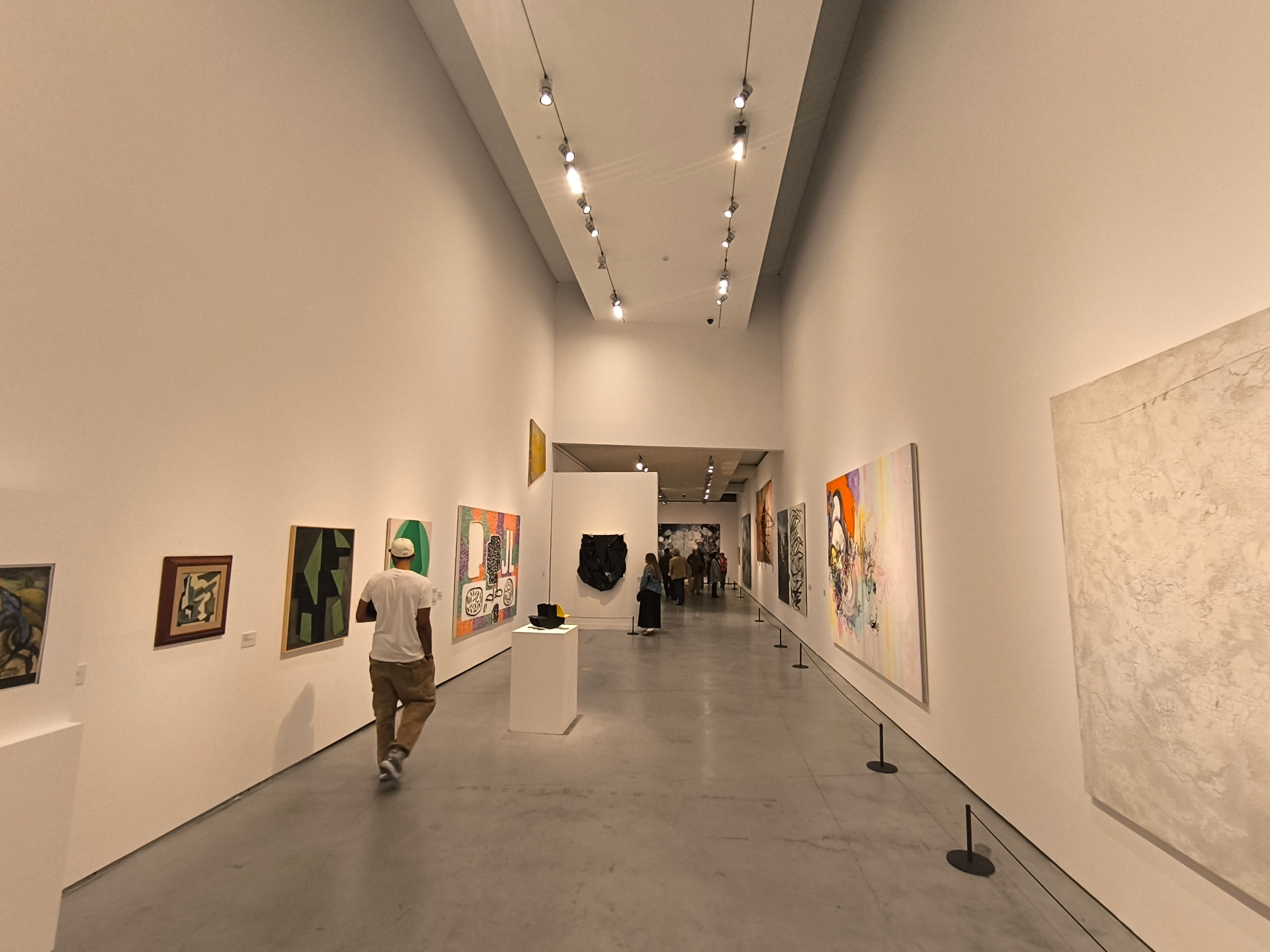
Curatorial concept
The thesis that gives the exhibition reason to exist.
Selection & research
Works, archives and sources gathered with scholarly care.
Exhibition design
Sequence, lighting and architecture in service of the work.
Interpretive text
Wall labels and catalogues written for visitors, not jargon.
Loans & rights
Managing the practical work of bringing objects into the room.
Public programmes
Talks, tours and workshops that extend the exhibition's life.
The work
What curation actually involves.
Curating is not hanging pictures. It is deciding: which works, in what order, next to which others, with what text and under what light. That sequence of decisions is what turns a group of objects into an argument a visitor can follow without a manual.
We work with artists, collectors, galleries, foundations and institutions — from a single room to a full exhibition programme — with one point of contact who holds the project from the first idea to the deinstall.
Method
From the first idea to opening night.
- 01
Research & thesis
Every exhibition starts with a question. We read, visit studios and archives, and write a short curatorial statement that says what the show is arguing — one page, in plain language.
- 02
Selection & loans
Works are chosen against that argument, not against availability. We then handle loan requests, condition reports, insurance, transport and rights with owners, galleries and shippers.
- 03
Design & sequence
The order in which a visitor meets each work is the argument itself. We plan sightlines, wall colours, light levels, cases and plinths, and test the sequence at scale before anything is built.
- 04
Texts & mediation
Wall texts, labels, catalogue entries and guided-visit notes written for visitors rather than for specialists: accurate, brief and free of jargon.
- 05
Installation & opening
We supervise the install: hang heights, spacing, light focus, the choreography of the opening. The last ten per cent is where an exhibition is won.
- 06
Afterlife
Tours, talks, catalogues, digital documentation and a clean deinstall, so the project keeps working after the walls come down.
Formats
Kinds of projects we build.
Solo shows & retrospectives
One artist's work read closely, with enough distance to see its whole arc.
Group & thematic shows
Many practices placed around a single question.
Museum & institutional projects
Permanent rooms, cycles and collection reviews held to an editorial standard.
Gallery & project spaces
Programmes where every show has to say something new.
Art fair presentations
An argument compressed into a few metres, built to stop the walk.
Collection rehangs
A second reading of what is already owned.
Catalogues & essays
The writing that keeps an exhibition alive after its opening.
Digital & hybrid exhibitions
Online versions that are not a scan of the room, but another way of walking it.
“An exhibition is an argument made with objects. If the argument is weak, no amount of beautiful design will save it.”
Have a body of work that deserves a room?
Tell us what you have — an archive, a collection, a space, a date. We'll come back with a first sketch of what the exhibition could be.